Skip to content

Ipamorelin: The Selective Growth Hormone Secretagogue — Research Overview

Ipamorelin is a synthetic pentapeptide belonging to the Growth Hormone Releasing Peptide (GHRP) class — compounds that stimulate HGH secretion through a receptor pathway distinct from GHRH. What distinguishes Ipamorelin within this class is its selectivity profile: it stimulates HGH release with minimal effect on other pituitary hormones like cortisol and prolactin that earlier GHRPs co-stimulated. This selectivity has made it a valuable research tool for studying selective GH axis activation.

BPC-157 and Growth Hormone

BPC-157 and Growth Hormone: Separate Mechanisms, Complementary Research Profiles

BPC-157 and growth hormone-related compounds are frequently discussed together in fitness and biohacking contexts, but understanding their relationship requires separating what is documented in the scientific literature from what is speculated. The two systems operate through entirely different mechanisms — BPC-157 primarily through nitric oxide, growth factor receptor, and prostaglandin pathways; GH and its analogues through the GH receptor and IGF-1 axis. Yet there are genuine documented intersections between these systems that make their combined study scientifically interesting.

Sleep and Growth Hormone

Sleep and Growth Hormone: The Science of Nocturnal HGH Pulses

The relationship between sleep and growth hormone is one of the most consistent and reproducible findings in endocrinology. The largest daily pulse of HGH occurs during sleep — specifically during the first episode of deep, slow-wave sleep. This is not a minor hormonal fluctuation; it represents a substantial portion of total daily HGH output. Understanding this relationship is essential context for any research involving the GH/IGF-1 axis.

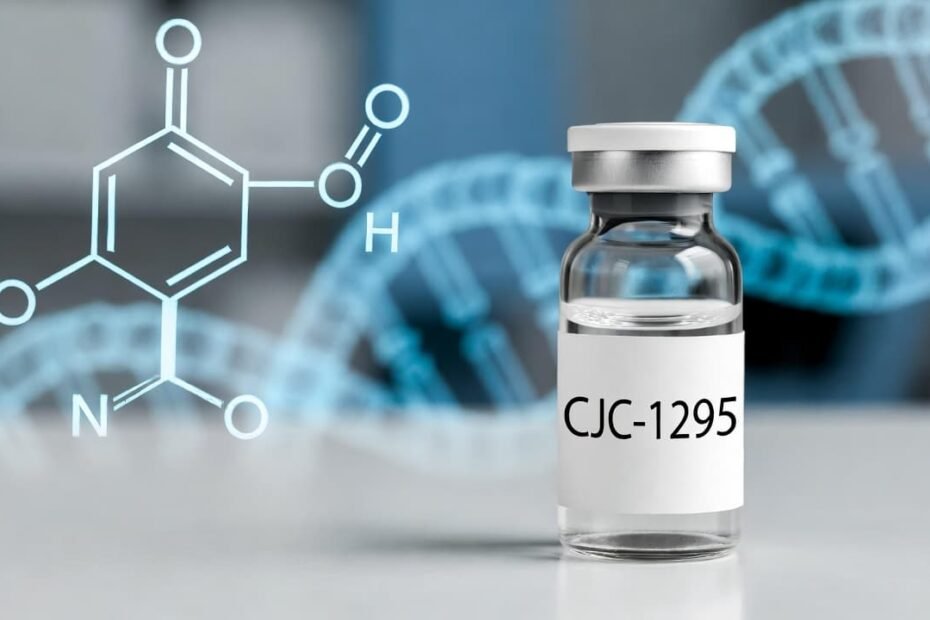
CJC-1295: Research Profile of a GHRH Analogue Peptide

CJC-1295 is a synthetic analogue of growth hormone-releasing hormone (GHRH) — the hypothalamic peptide that stimulates HGH secretion from the pituitary. Unlike compounds that directly provide exogenous HGH, CJC-1295 works upstream, stimulating the pituitary’s own HGH production. This distinction has significant implications for the physiological pattern of HGH release and has made CJC-1295 a notable tool in growth hormone axis research.

Peptide Bioregulators and the HGH Axis

Peptide Bioregulators and the HGH Axis: Epithalon, Thymalin and Neuroendocrine Research

The peptide bioregulator research programme developed in Soviet and Russian science from the 1970s onwards produced a family of short peptides proposed to exert organ-specific regulatory effects. Two of the most studied — Epithalon (pineal-derived tetrapeptide) and Thymalin (thymic extract) — have points of intersection with growth hormone axis biology that make them relevant to HGH research, even though they are not GH secretagogues themselves.

igf 1

IGF-1 and Growth Hormone: How the GH/IGF-1 Axis Works

Growth hormone and IGF-1 are closely linked — so closely that they’re often discussed as a single system called the GH/IGF-1 axis. But they are distinct molecules with different structures, different receptors, different tissue sources, and different biological effects. Understanding how the axis functions — and where the two molecules diverge — is essential for interpreting HGH research intelligently.

GHRH vs GHRP

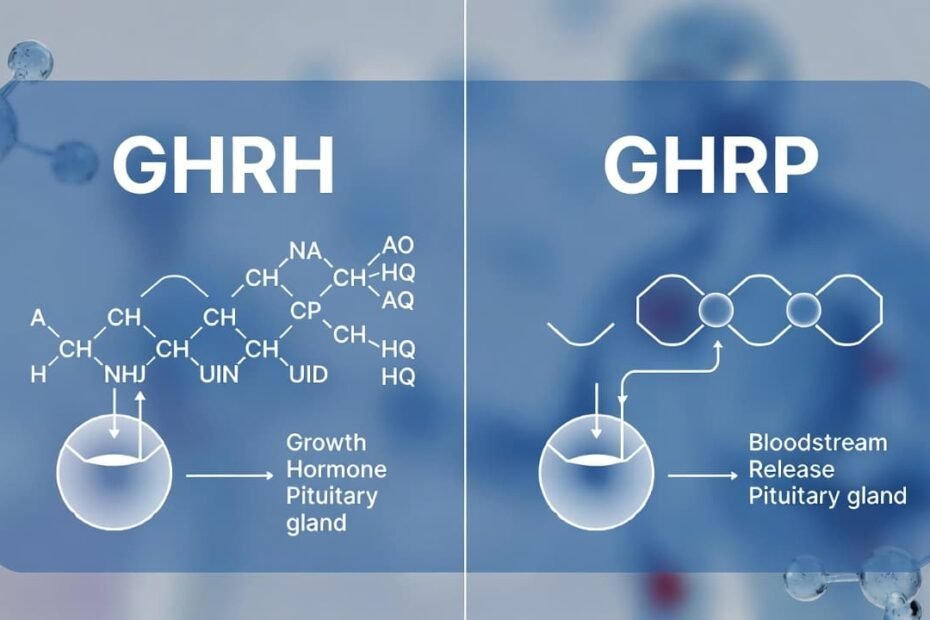
GHRH vs GHRP: Understanding Growth Hormone Secretagogue Research

In HGH research, two distinct classes of compounds are used to stimulate growth hormone secretion: GHRH analogues (Growth Hormone-Releasing Hormone analogues) and GHRPs (Growth Hormone-Releasing Peptides). These are fundamentally different molecules acting through completely different receptors, and understanding their distinction is essential for interpreting research in this field.